How to Make Money with Apps in 2026 (Even If You Can’t Code)

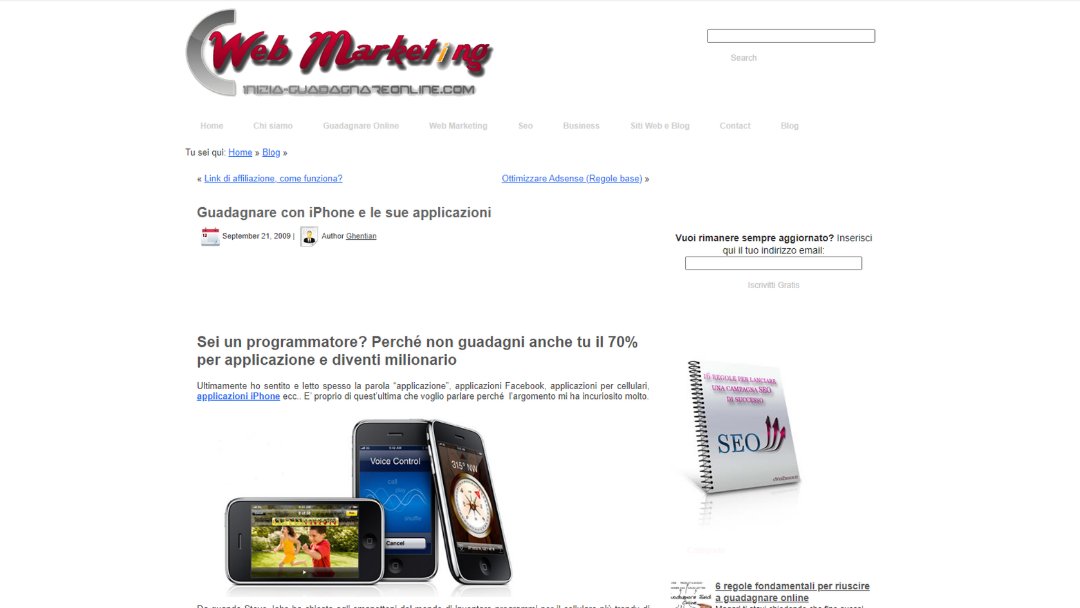
In 2009 I wrote an article about a phenomenon that was beginning to change the world: iPhone apps. Back then the App Store was young, competition was limited, and a simple (but well-made) idea was often enough to stand out. Unknown developers became digital entrepreneurs within months thanks to a model that seemed almost “magical”: Apple kept a cut and the creator pocketed the rest.
guadagnare con le app

Today, 17 years later, reality is different. The market is larger but also far more competitive. That doesn’t mean you can’t make money with apps — it means you need a different mindset: in 2026 developing an app is not just “publishing software,” it’s building a product with a business model, a user-acquisition strategy, and a clear value proposition. The good news is that thanks to modern tools and artificial intelligence, you can now enter this market without being an expert programmer.

The app market in 2026: real opportunities and intense competition

Over the years the mobile ecosystem exploded. Stores today host millions of apps and new products are published daily across categories: productivity, fitness, personal finance, creator tools, niche utilities, AI tools, enterprise apps, and more. This leads to two important consequences:

  • It’s harder to get noticed: a good idea isn’t enough; you need a solid go-to-market.
  • It’s easier to monetize well: users are accustomed to subscriptions, in-app purchases, and premium services.

In other words, the challenge today isn’t “create an app,” but create an app that solves a problem and get it to the right people.

How much can you realistically earn from an app?

The most common question is: how much can you earn with an app? The honest answer: it depends on the business model and your ability to distribute the product. Some apps never reach a meaningful audience; others generate recurring revenue in the five- or six-figure range monthly.

One point remains true: stores take a cut of sales. Generally the platform retains a percentage and the rest goes to the developer. What changed most since the early days is how you earn: in 2009 one-time paid apps were common; in 2026 subscriptions and in-app purchases dominate.

If you want realistic expectations, consider this: most apps don’t go viral or top the charts. But many can become a sustainable business with relatively small numbers, if monetization is right and the target audience is well defined.

Monetization models that work in 2026

There are several ways to make money from apps today. The choice depends on the app type, the target audience, and the value offered.

Subscriptions

The most common model for apps offering an ongoing service: productivity, fitness, personal finance, professional tools, advanced utilities, and AI apps. Subscriptions create recurring revenue and allow investment in improvements, support, and marketing.

Freemium + in-app purchases

Many apps are free but offer advanced features via one-time purchases or bundles. This works well for photo/video editors, creative tools, templates, premium features, and unlocking limits.

Advertising

Advertising suits apps with a large active user base and frequent sessions. It’s powerful but requires volume and a well-designed user experience to avoid destroying retention.

App as a service (SaaS)

Here the app is the mobile interface to a broader online platform. This is typical for B2B or “pro” offerings: the app becomes a simple access channel to dashboards, data management, reports, and automations.

Licenses and team packages

If the app is used in professional contexts, consider multi-user plans, enterprise licenses, and team pricing. This is one of the most reliable ways to increase average revenue per customer.

The uncomfortable question: can you become a millionaire with an app?

Yes, it’s possible. But it shouldn’t be the starting point. In 2026 the market is mature: publishing a “cute” app and hoping for millions of downloads won’t cut it. Massive success almost always requires:

  • A real problem (preferably urgent and with users willing to pay)
  • Excellent user experience (onboarding, speed, design, clarity)
  • A user acquisition channel (organic, ASO, content, ads, partnerships)
  • A coherent monetization model (pricing, value, upsells, retention)

The smarter path isn’t “aim for a lottery win” but to build a product that generates recurring revenue and grows over time. Many apps become significant businesses that way: one step at a time.

The big change: in 2026 you can build apps without coding

The barrier to entry has fallen dramatically. Today you can start with:

  • No-code platforms: to build an MVP and validate the idea quickly
  • Visual builders: for interfaces and app logic without complex code
  • AI for development: to generate code, prototypes, screens, copy, flows, and documentation

This doesn’t mean everything is easy. It means you can go much further before needing to invest in a technical team. Crucially, you can test an idea on the market, learn what works, and decide whether to scale.

In 2026 winners aren’t only those who can code, but those who can:

  • identify a need
  • design a simple product
  • bring real users
  • monetize without overcomplicating things

App categories with the most potential in 2026

Not all niches are equal. Some areas are growing faster and offer more concrete opportunities.

AI apps and personal assistants

Tools that help create content, organize work, automate tasks, and improve productivity and decisions. AI often multiplies value by saving time and boosting quality.

Productivity and focus

People want apps that reduce chaos and distractions: task management, planning, habits, time-blocking, notes, and personal workflows. Great design and a clear promise can make the difference.

Apps for creators and small businesses

Creators, freelancers, and micro-businesses have concrete needs: content planning, performance analytics, client management, estimates, mini-CRMs, and simple automations. These markets will pay if value is immediate.

Education and micro-learning

Apps that teach specific skills practically: languages, digital tools, soft skills, and professional training. Subscriptions work well here if the learning path is clear and measurable.

Vertical utilities

Many successful apps aren’t “for everyone.” They’re hyper-specific tools for a sector or activity: inspections, checklists, calculations, scanners, reports, and document management. They’re often less competitive and easier to monetize.

How much does it cost to build an app in 2026 (realistic estimates)

Costs depend on complexity and how much you do yourself. A practical estimate:

  • No-code / prototype: a few hundred to a few thousand euros per year (tools + services)
  • MVP with freelancers: often €5,000 to €30,000 depending on features and design
  • Full product with team/agency: can easily exceed €50,000–€100,000

The key point: you don’t need to start “perfect.” The most effective strategy is to create a minimal version that solves a specific problem, launch it, gather feedback, and iterate. This reduces risk and waste.

The real secret: technology, UX, and distribution

Many think success depends on code. In reality, in 2026 an app’s success is almost always the result of a balance between three elements:

  • Value proposition: what you solve and for whom
  • User experience: how easy it is to get the result
  • Distribution: how you bring users every day

You can have a technically flawless app and fail because no one discovers it. Or you can have a simple app with a clear message and a well-built acquisition channel and turn it into a real business.

So if you want to make money with apps in 2026, the right question isn’t “how do I build it?” but:

What problem do I solve, how much is it worth to those who face it, and how do I reach those people?

Conclusion: the app business is alive, but the rules have changed

In 2009 the App Store was a gold rush. Today it’s no longer a gold rush: it’s a mature market. But precisely because it’s mature, it’s full of opportunities for those who build useful, sustainable products.

The difference is that in 2026 winning isn’t about publishing an app and hoping. It’s about designing a simple product, putting it in front of real users, improving it, and monetizing intelligently.

And the most important news: thanks to no-code and AI, you can start today even without coding skills. Not to skip quality, but to move faster, validate your idea, and build a real growth path.

Because even now, the starting point is the same as 17 years ago: a simple but effective insight. The difference is that now you have many more tools to turn it into a business.

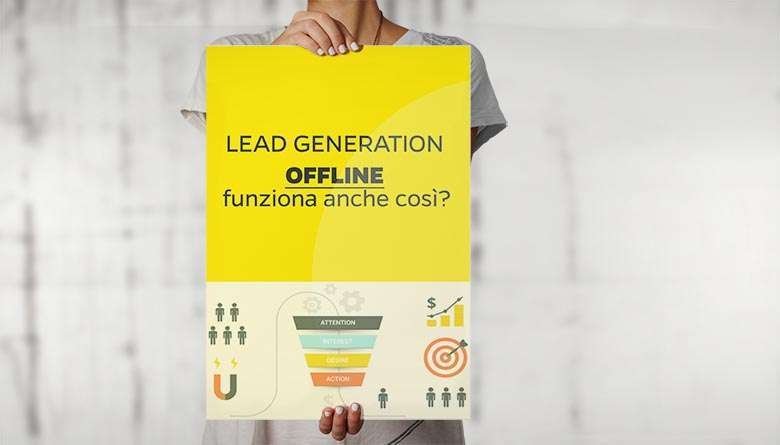
Lead Generation offline: does it work like this too?

Is this extraordinary web marketing technique applicable to traditional promotion systems as well?

Yes — offline Lead Generation exists and, when paired with online, it can work great…

Talking about lead generation offline is not a contradiction. True: it’s one of the most effective web marketing strategies, born and developed in the digital world. However, limiting it exclusively to online would mean giving up huge potential, especially for businesses operating in well-defined local areas.

In this article we’ll see how lead generation can be successfully applied to traditional promotional tools, and especially how integrating online and offline is today the real competitive lever for local shops, neighborhood businesses, professionals and SMEs.

Lead Generation offline: what we’re really talking about

When you hear lead generation you immediately think of digital funnels, advertising, landing pages, marketing automation, CRM and email campaigns. All correct. But the definition of lead generation is much broader: it means generating qualified contacts, i.e. people genuinely interested in your products or services.

If that’s the goal, the channel becomes secondary.

A contact can come from:

  • an online form
  • a phone call
  • a QR code on a flyer
  • a loyalty card filled out in store
  • a request for information at a trade fair

That’s why talking about lead generation offline is not only correct, it’s strategically smart.

The role of territory in contact acquisition strategies

Think of all the local businesses that base their business on a specific geographic area:

  • neighborhood shops
  • restaurants
  • gyms
  • beauty centers
  • professional offices
  • dealerships
  • showrooms

For these businesses the territory is not just a detail: it’s the main market.

Of course digital allows advanced geotargeting. Tools like Google Ads or Facebook Ads let you reach users in very specific areas. You can show ads only to people who live within 5 km of the shop, or to those who frequent certain zones.

But there’s a structural limit: not everyone is online when you want to reach them.

That’s where offline comes into play.

The continuing value of traditional advertising

Posters, flyers, brochures, handbills, billboards: tools many consider outdated, but that actually retain enormous strength, especially locally.

It happens every day:

  • flyers in mailboxes
  • flyers handed out on the street
  • promotions left in partner stores
  • postings in the neighborhood

If you live in a small-to-medium town, the whole municipality can be a plausible target. In big cities like Milan or Rome the story changes: different neighborhoods mean different audiences, habits and purchasing power.

Offline allows a physical presence in the territory that digital alone cannot replicate.

Lead Generation online and offline can coexist. In fact… they must

The real point is not choosing between traditional and digital marketing. The point is integrating them.

Online and offline lead generation work better when they work together.

This is even more true for local businesses that need to:

  • become known locally
  • build trust
  • generate in-store traffic
  • retain customers

If you run a local business, connecting online and offline isn’t optional: it’s a strategic necessity.

The flyer as a paper landing page

Take one of the most classic tools: the flyer.

Many see it as simple informational advertising. In reality it can become a powerful lead generation tool if designed with digital logic.

The rules are similar to an effective landing page:

  • strong headline
  • clear value proposition
  • immediate benefit
  • call to action
  • urgency or incentive

The goal is not to inform. The goal is to prompt action.

Online the action is filling a form. Offline it can be entering the store… or going online.

And that’s where real integration is born.

From paper to digital: the bridge that generates leads

Imagine this scenario.

You distribute flyers in your neighborhood. But instead of just describing your services you include:

  • a link
  • a QR code
  • a discount code
  • a reserved promo

For example: “Scan the QR code and get 20% off.”

At that moment you’re turning an offline tool into an online lead generation channel.

Those who scan:

  • leave data
  • download a coupon
  • enter your funnel
  • become trackable

Measuring what was previously invisible

One historic limit of traditional marketing has always been the inability to measure results.

How many people saw the poster?
How many flyers worked?
Which area performed best?

By integrating digital elements you can finally measure the return on investment (ROI) of offline campaigns too.

You can know:

  • how many coupons were redeemed
  • how many QR codes were scanned
  • how many landing visits were generated
  • how many sales resulted

You turned traditional promotion into a data-driven system.

You have your leads. You generated them… offline

Thanks to a flyer, brochure or poster you generated qualified contacts.

Lead Generation offline.

Not only that:

  • you have emails
  • you have phone numbers
  • you have preferences
  • you have interaction history

Precious data for any future strategy.

The strategic advantage of hybrid statistics

Integrating offline and online is not only about generating contacts. It’s about gathering insights.

You can discover:

  • which neighborhoods respond better
  • which offers convert more
  • which formats work
  • which periods perform

Information that improves:

  • digital campaigns
  • print campaigns
  • commercial offers
  • pricing

Cold calling vs territorial advertising: don’t get confused

Many associate offline lead generation with invasive techniques like cold calling. But that’s not the focus.

Effective traditional tools today are:

  • targeted flyers
  • direct mail
  • local events
  • trade fairs
  • open days
  • strategic postings

They are non-invasive channels with high territorial visibility.

The two major limits of offline (and how to overcome them)

Historically traditional marketing has had two major issues:

  • defining the target
  • measuring results

Today both can be overcome thanks to digital integration.

Target
Targeted distribution based on real data.

Measurement
Tracking via codes, personalized URLs and dedicated landing pages.

QR codes, coupons and dedicated landings: key tools

  • QR Code → immediate access to landing or promo
  • Unique discount codes → conversion tracking
  • Personalized URLs → traffic source analysis
  • Contests → data collection
  • Digital loyalty cards → customer database

Events and trade fairs: relational lead generation

Trade fairs, open days, workshops and openings let you:

  • meet prospects
  • build trust
  • explain services
  • collect contacts

By digitalizing the process:

  • online registration
  • QR badges
  • email follow-up
  • post-event automations

Omnichannel strategies: the real competitive advantage

The most effective strategies today are omnichannel.

A user can:

  1. receive a flyer
  2. visit the landing
  3. leave an email
  4. receive a promo
  5. enter the store

One path, more touchpoints, higher conversion.

From physical traffic to owned database

A main goal of modern lead generation is building owned databases.

Offline lets you transform:

  • walk-in customers
  • passersby
  • event visitors

into contacts you can activate with marketing automation.

Conclusion: an extraordinary weapon for local business

Now you know that online and offline marketing are not separate worlds.

They can integrate, amplify each other and multiply results.

You now know it’s possible to:

  • generate leads with flyers
  • track print campaigns
  • measure offline ROI
  • build customer databases

If you run a neighborhood shop or a local business you have an extraordinary weapon to promote your business and boost your revenue.

The difference isn’t the channel you use, but the strategy you decide to integrate them with.

Google Ads: how to get the most out of online advertising

Google Ads is unquestionably one of the most powerful and versatile online advertising platforms available to businesses of all sizes. However, to fully harness its potential and maximize return on investment (ROI), it’s essential to understand the strategies and techniques that optimize ad campaigns. This article dives deep into how to get the most out of Google Ads, offering a comprehensive guide that covers basics through advanced strategies.

What Is Google Ads?

Google Ads is an online advertising platform developed by Google that lets businesses create ads shown on Google search results, YouTube, Google Play and partner websites via the Google Display Network. The platform uses a pay-per-click (PPC) model, meaning advertisers pay only when a user clicks their ad.

Benefits of Advertising on Google Ads

  1. Precise Targeting: Google Ads offers advanced targeting tools to reach users based on keywords, geographic location, demographics, interests and online behavior.
  2. Fast Visibility: Unlike organic marketing methods that can take months to deliver results, Google Ads campaigns can generate traffic and conversions almost immediately after activation.
  3. Measurability and Transparency: Google Ads provides detailed analytics and reporting, allowing advertisers to monitor campaign performance and make real-time optimizations.
  4. Budget Control: Advertisers have full control over campaign budgets and can set daily or total limits to avoid overspending.

Campaign Setup

Selecting Campaign Objectives

Clearly defining campaign objectives is the essential first step in creating a successful Google Ads strategy. Objectives vary by business type and needs and may include:

  • Increasing website traffic
  • Lead generation
  • Boosting online sales
  • Promoting a mobile app
  • Raising brand awareness

Each objective requires a different approach and campaign type.

Choosing the Campaign Type

Google Ads offers several campaign types, each with its own features and benefits:

  1. Search Network: Ads appear in Google search results and on partner sites that show search ads.
  2. Display Network: Ads appear across a wide network of Google partner websites, videos and mobile apps.
  3. Shopping: Ads designed specifically for online retailers, showing products with images and prices.
  4. Video: Video ads shown on YouTube and across the Google Display Network.
  5. App: Ads created to promote mobile app installs.
  6. Smart: Automated campaigns that optimize targeting and bidding to maximize results.

Keyword Research and Selection

Using the Keyword Planner Tool

The Google Ads Keyword Planner is essential to identify the most relevant and effective keywords for your campaigns. Used strategically, it helps optimize marketing actions and significantly improve campaign performance. Here’s how to make the most of it:

Identify Seed Keywords

Start with seed keywords—broad terms related to your business. These serve as a starting point to discover more specific and relevant variants. For example, a bakery might start with terms like “bakery,” “cakes,” “sweets,” etc. Steps to proceed:

  1. Brainstorm: List the immediate keywords that describe your business.
  2. Use Internal Resources: Consult colleagues or customer feedback to find commonly used keywords.
  3. Analyze Competitors: Visit competitor sites and note the key terms they use in their content.

Analyze Search Volume and Competition

After identifying seed keywords, analyze search volume and competition. The Keyword Planner provides detailed data for each keyword, including:

  1. Monthly Search Volume: How often a keyword is searched on Google. High volume indicates strong demand but often higher competition.
  2. Competition: Rated low, medium or high; high competition often means higher cost-per-click (CPC).
  3. Estimated Cost per Click (CPC): Helps you understand potential spending per click when competing for that keyword.

Use these data to find keywords that balance search volume and competitiveness. Prefer keywords with enough volume to drive traffic but not so competitive that bids become impractical.

Expand the Keyword List

Use related keyword and phrase suggestions from the Keyword Planner to expand your list and uncover opportunities that may not be obvious. Google Ads will suggest terms based on your seed keywords, helping you explore variants and synonyms. Steps to expand:

  1. Related Terms and Synonyms: Add similar keywords that can attract the same search intent.
  2. Long-Tail Keywords: Longer, more specific phrases with lower search volume but higher conversion intent, e.g., instead of “cakes” use “custom birthday cakes.”
  3. Seasonal Search Trends: Identify keywords that become relevant in certain seasons, like “Christmas sweets” or “Valentine’s bakery.”

Keyword Match Types

Google Ads lets you specify how keywords should behave with four main match types, each affecting how ads are triggered. Understanding and using these types effectively is crucial for campaign optimization.

Broad Match

Broad match triggers ads for searches that include the keywords, similar variants and related content, making it the widest match type.

  1. Wide Reach: Ads can appear for a broad range of related searches, increasing the chance to reach a large audience.
  2. Less Precise Relevance: Because it covers many related terms, some clicks may be less relevant, leading to lower conversion rates.

Phrase Match

Phrase match shows ads for searches that contain the exact keyword phrase or close variants.

  1. Balance Between Reach and Precision: Offers a good balance between reach and relevance.
  2. Specific Syntax: The keyword must appear in the exact order of the phrase, though additional words before or after are allowed.

Exact Match

Exact match shows ads only for searches that match the exact keyword specified.

  1. Maximum Precision: Ads are shown only to users searching the exact term.
  2. Lower Reach: Precision reduces reach but improves relevance and conversion rates.

Negative Match

Negative match prevents ads from appearing for searches containing specific words, avoiding irrelevant clicks.

  1. Prevent Wasteful Clicks: Helps save budget by preventing ads from showing in irrelevant contexts.
  2. Optimize Budget: Ensures budget is spent only on relevant searches, improving overall performance.

Implementing Keyword Research into Your Marketing Strategy

After selecting and analyzing keywords, integrate them into your marketing strategy:

  1. Organize Keywords into Ad Groups: Group similar keywords into ad groups to create highly relevant ads.
  2. Optimize Ad Copy: Use selected keywords to craft ad copy that addresses users’ needs and search intent.
  3. Monitor and Update: Continuously monitor keyword performance and update the list to include new opportunities and remove underperformers.

In conclusion, keyword research and selection are fundamental to Google Ads success. Using the Keyword Planner strategically helps you identify and implement the most effective keywords, significantly improving ad relevance and campaign performance.

Creating Effective Ads

Text Ad Structure

Google Ads text ads consist of three main components:

  1. Headline: The headline is the most visible part of the ad and should contain the most relevant keywords. Google allows up to three headlines, each separated by a dash.
  2. Description: The description provides more detail about the offer or product. It’s an opportunity to include calls to action (CTAs) and highlight unique features.
  3. Display URL: Indicates where users will land after clicking the ad. It should be short, clear and relevant.

Best Practices for Writing Ads

Keep these best practices in mind when writing effective ads:

  1. Include Keywords: Adding relevant keywords to headlines and descriptions increases ad relevance.
  2. Make a Clear Offer: Clearly state what the product or service offers and why users should choose you over competitors.
  3. Use Calls to Action: Encourage users to take a specific action like “Buy now”, “Sign up today” or “Request a quote”.
  4. Use Ad Extensions: Extensions can include extra information, links to specific site sections, direct call options and more, improving visibility and CTR (Click-Through Rate).

Landing Page Optimization

Importance of Relevance and User Experience

The landing page is where users arrive after clicking your ad, and its quality directly impacts conversions and your ads’ quality score. Key factors include:

  1. Content Relevance: The page must closely match the ad and keywords. If users don’t find what they expect, they’ll likely leave quickly.
  2. Load Time: Slow-loading pages increase bounce rates and lower quality scores. Tools like Google PageSpeed Insights help identify and fix speed issues.
  3. User Experience (UX): Clean design, simple navigation and clear CTAs improve engagement and conversion.

Key Elements of an Effective Landing Page

  1. Clear, Compelling Headline: The headline should be impactful and immediately convey the offer’s value.
  2. Persuasive, Relevant Content: Use persuasive copy that addresses your target audience’s needs and desires. Include testimonials, social proof and FAQs.
  3. Visible Calls to Action: CTAs should be well-placed and easy to spot, guiding users toward the desired conversion.
  4. Simple Forms: If collecting info, ensure forms are short and easy to complete.
  5. Responsive Design: The page must be optimized for all devices, considering a large share of users browse on mobile.

Performance Monitoring and Analysis

Using Google Analytics

Google Analytics is indispensable for tracking the effectiveness of Google Ads campaigns. Key analyses include:

  1. Website Traffic: Track the volume of traffic coming from paid campaigns.
  2. User Behavior: Analyze how users interact with the site after arriving via ads (time on page, pages visited, bounce rate).
  3. Conversions: Measure how many desired actions (sales, sign-ups, downloads) were completed thanks to ads.

Main KPIs to Monitor

To evaluate and optimize Google Ads performance, monitor these KPIs (Key Performance Indicators):

  1. Click-Through Rate (CTR): The percentage of people who click your ad compared to those who see it. High CTR indicates a relevant, attractive ad.
  2. Cost per Click (CPC): The amount paid for each ad click. Optimizing CPC is essential to control costs.
  3. Cost per Acquisition (CPA): Cost associated with acquiring a new customer or lead. This KPI is crucial to assess campaign profitability.
  4. Return on Investment (ROI): Measures advertising profitability by comparing revenue generated to campaign costs.
  5. Quality Score: A Google-assigned score influenced by expected CTR, ad relevance and landing page quality. A high Quality Score lowers costs and improves ad positions.

Ongoing Campaign Optimization

A/B Testing and Ad Optimization

A/B testing is fundamental to continuously improving ad performance. It involves creating two or more ad variants to determine which performs best. Areas to test include:

  1. Ad Headlines: Change headlines to see which attracts more clicks.
  2. Descriptions: Test different descriptions to find what resonates with your audience.
  3. Calls to Action: Swap CTAs to discover which drives more conversions.
  4. Images (for Display Ads): Try different images to see which captures more attention.

Bidding Strategy and Budget Adjustments

Optimizing bids and budgets is crucial to maximize ROI. Strategies include:

  1. Manual vs. Automated Bidding: Manual bidding gives CPC control, while Google’s automation leverages advanced algorithms to optimize bids based on campaign goals.
  2. Bid Adjustments: Change bids by device, location, time of day and demographics to maximize performance.
  3. Flexible Budgeting: Reallocate budget based on campaign performance. If a campaign performs well, consider increasing its budget to maximize results.

Advanced Google Ads Strategies

Remarketing

Remarketing is an advanced technique that targets users who have already interacted with your site or app. Effective remarketing strategies include:

  1. List-Based Remarketing: Target users who visited specific pages, e.g., users who added products to cart but didn’t complete purchase.
  2. Dynamic Remarketing: Show ads with specific products or content a user viewed previously, increasing conversion chances.
  3. YouTube Remarketing: Show ads to users who interacted with your channel or videos.

Affinity Audiences and Custom Audience Segments

Google Ads lets you create targeted audience segments using behavioral data:

  1. Affinity Audiences: Target users who’ve shown interest in specific categories. For example, sellers of sports equipment can target users interested in sports and fitness.
  2. Custom Audience Segments: Build audience segments based on keywords, URLs or apps your potential customers frequently visit or use.

Conclusion

Summary of Key Points

Google Ads is a powerful tool for online advertising, but success depends on well-planned strategies and continuous optimization. Understanding campaign types, conducting thorough keyword research, creating effective ads, optimizing landing pages and closely monitoring performance are essential steps to maximize Google Ads results.

Final Tips for Success with Google Ads

  1. Set Clear Goals: Define exactly what you want to achieve with your campaigns.
  2. Do Deep Research: Invest time in keyword research and understanding your audience.
  3. Analyze and Adapt: Use data and analytics to monitor performance and make continuous improvements.
  4. Experiment and Optimize: Use A/B testing to find the most effective ad variants and refine bidding strategy.
  5. Stay Updated: Google Ads evolves constantly. Keep up with new features and best practices to keep your campaigns competitive.

Implementing and optimizing a Google Ads strategy takes time and dedication, but results can be outstanding in terms of traffic, leads and sales. I hope this guide helps you fully leverage Google Ads and reach your business goals.

Go to Top