Increase Sales? Invest in Lead Generation
Increase Sales? Invest in Lead Generation
Increasing sales is not just about running more ads, publishing more content, or pushing your products harder. In most cases, selling more means building a system that attracts the right people, earns their trust, collects qualified contacts, and turns interest into real business opportunities.
This is where lead generation becomes important. Not as a buzzword, not as a magic shortcut, and not as a simple form placed somewhere on your website, but as a structured customer acquisition process.
If you want more customers, you need more than traffic. You need attention, trust, relevance, timing, follow-up, and a clear path from first contact to sales conversation.
Let’s start with a counterintuitive idea: if you want to sell more, stop thinking only about selling.
That may sound strange, but it is exactly how modern marketing works. People do not want to be constantly interrupted by companies shouting about their products. They want to understand, compare, evaluate, trust, ask questions, and feel that the company in front of them understands their problem.
The sale comes later. Trust comes first.
A Better Way to Increase Sales and Attract Qualified Customers
For many companies, the real problem is not a lack of visibility. The real problem is attracting the wrong audience, collecting weak contacts, and treating every inquiry as if it had the same value.
A qualified lead is not just someone who leaves an email address. It is a person or company that has shown interest, matches your target, and has at least a potential reason to buy from you.
That interest can come from different actions:
- filling out a contact form;
- downloading a guide;
- requesting a quote;
- booking a consultation;
- signing up for a webinar;
- subscribing to a newsletter;
- asking for a product demo;
- interacting with useful content several times.
The distinction matters. A database full of cold, unqualified, poorly segmented contacts is not a growth asset. It is digital clutter.
Real customer acquisition is not about collecting as many names as possible. It is about generating relevant conversations with people who have a real problem, a real interest, and a real possibility of becoming customers.
Why “We Are Leaders in Our Industry” Is No Longer Enough
There is one phrase that has probably damaged more company websites than many bad advertising campaigns: “We are leaders in our industry”.
The problem is not that a company wants to communicate authority. The problem is believing that authority can simply be declared.
Today, almost every business describes itself as innovative, reliable, customer-oriented, tailored, experienced, and industry-leading. After a while, they all sound the same.
Modern buyers are different. They are more informed, more selective, and more independent. Before contacting your company, they may have already visited competitors’ websites, read reviews, compared solutions, watched videos, searched on Google, checked LinkedIn, asked colleagues, or used AI tools to understand the market.
In many cases, when a potential customer finally contacts you, they have already completed a large part of their decision-making journey.
That is why the real question is no longer:
“How do I promote my products?”
The better question is:
“How can I become useful, credible, and relevant before the customer is ready to buy?”
That is exactly the role of a strong acquisition strategy.
What Is Lead Generation?
Lead generation is the process of attracting potential customers and turning them into identifiable contacts who may become future buyers.
Instead of waiting for someone to buy immediately, you create a journey that helps people discover your company, understand your value, leave their contact details, and start a relationship with your brand.
This process can involve several touchpoints, such as:
- a landing page designed to collect quote requests, bookings, or inquiries;
- a free resource, such as a guide, checklist, report, template, or calculator;
- Google Ads campaigns that reach people actively searching for a solution;
- LinkedIn Ads campaigns aimed at specific roles, industries, or company sizes;
- webinars that educate your audience and collect qualified registrations;
- website forms designed to gather useful information without creating friction;
- AI chatbots or virtual assistants that answer questions and qualify requests;
- email newsletters that build trust over time;
- blog content that attracts people searching for information, comparisons, or solutions.
However, the tool itself is never the strategy.
A landing page without a clear offer will not convert well. An advertising campaign without proper targeting will waste budget. A form that asks the wrong questions will create confusion. A newsletter without valuable content will become noise.
The system works when every element has a clear purpose.
How Customer Acquisition Supports Sales
Lead generation does not replace sales. It prepares the ground for better sales conversations.
One of the most common mistakes companies make is separating marketing and sales too sharply. Marketing says it has generated contacts. Sales says those contacts are not good enough. The result is frustration, wasted budget, and missed opportunities.
A strong acquisition strategy connects marketing and sales into one commercial system.
Marketing attracts, educates, qualifies, and nurtures. Sales listens, understands, advises, and closes. When these two areas work together, the entire customer acquisition process becomes more efficient.
This is why prospect generation should be part of a broader business growth plan, not a one-off campaign. If you want to understand how it fits into a wider acquisition strategy, you can also read this guide on marketing strategies for business growth.
To increase sales, your strategy should answer practical questions such as:
- Who is your ideal customer?
- What problem are they trying to solve?
- How aware are they of that problem?
- Are they looking for information, comparing solutions, or ready to speak with someone?
- What content can help them at this specific stage?
- What information does your sales team need to evaluate the opportunity?
- How quickly is the contact followed up?
- What happens if the person is not ready to buy today?
A contact form alone will not answer these questions. A proper system will.
Why This Strategy Matters More Than Ever
Customer behavior has changed dramatically. People want to research before speaking with a salesperson. They compare options, read content, evaluate alternatives, and often arrive at the first conversation already informed.
This does not mean sales teams are no longer useful. It means they enter the journey at a different stage.
Potential customers want to know whether your company is serious, competent, trustworthy, experienced, and capable of solving their problem before they invest time in a conversation.
That is why modern customer acquisition must work across three levels:
- Attraction: bringing the right people to your website, landing page, or content.
- Conversion: turning anonymous visitors into identifiable contacts.
- Nurturing: maintaining the relationship until the prospect is ready for a buying conversation.
Many companies focus only on the first two steps. They attract traffic and collect contacts, but they do very little afterward.
That is a huge missed opportunity.
Not every prospect is ready to buy today. Some will be ready next week. Others in three months. Others in a year. Without a follow-up and nurturing system, those opportunities disappear.
Qualified Leads Are a Commercial Asset
A qualified lead is not just an email address. It is a person or company that matches your target and has shown a meaningful level of interest.
Not all contacts have the same value. A simple way to classify them is:
- Cold contact: someone who has left contact details but has not shown strong buying intent yet.
- Warm prospect: someone who has interacted multiple times, read content, opened emails, clicked links, or shown interest in a specific topic.
- Hot opportunity: someone who has requested information, a quote, a consultation, a demo, or a direct conversation.
The goal is not to treat everyone in the same way.
A cold contact may need educational content. A warm prospect may need a case study, comparison, or more advanced resource. A hot opportunity should be contacted quickly by the sales team.
This approach helps you avoid two common mistakes: selling too aggressively to people who are not ready and ignoring people who are close to making a decision.
Trust Is the Real Engine of Customer Acquisition
Every acquisition process works better when the potential customer feels that your company is clear, competent, and reliable.
Trust is not created by a slogan. It is created by consistent signals:
- a clear and updated website;
- useful and relevant content;
- service pages written for the customer, not for the company’s ego;
- real testimonials;
- concrete case studies;
- simple but intelligent forms;
- fast responses;
- personalized follow-up;
- consistent messaging across website, email, advertising, and sales conversations.
If someone fills out a form and receives a reply five days later, trust decreases. If they download a guide and immediately receive a series of aggressive sales emails, trust decreases. If they ask for information and feel treated like a number, trust decreases.
Getting a contact is only the beginning. Building a relationship is where the real value starts.
This is where lead nurturing becomes crucial: the process of educating, supporting, and engaging prospects over time until they are ready to move forward.
In simple words, not everyone buys immediately, but you can remain present and useful until the right moment arrives.
How to Build a Customer Acquisition Strategy
A good strategy always starts with the customer, not with the product.
Before creating an ad, landing page, campaign, or downloadable resource, you need to understand who you want to reach and why that person should care.
1. Define Your Ideal Customer
It is not enough to say “we target companies” or “we target people who want to buy”. You need to be more specific.
In B2B, you may define your target based on industry, company size, job role, location, revenue, digital maturity, urgency, or business problem.
In B2C, you may focus on needs, desires, objections, buying behavior, interests, budget, lifestyle, and awareness level.
The clearer your target, the stronger your message becomes.
2. Create a Valuable Offer
Why should someone give you their contact details?
This is one of the most underestimated questions in lead generation.
Many companies place a generic “Contact us” form on their website and expect results. But visitors are not always ready to contact you directly. Sometimes they need a lighter, more useful reason to take the first step.
Effective offers can include:
- a free consultation;
- a checklist;
- a free audit;
- a practical guide;
- an industry report;
- an online calculator;
- a template;
- a webinar;
- a product demo;
- a personalized evaluation.
The offer must match the customer’s level of awareness.
Someone who is only researching may not be ready to book a sales call. Someone with an urgent problem may be ready to request a quote immediately.
3. Build an Effective Landing Page
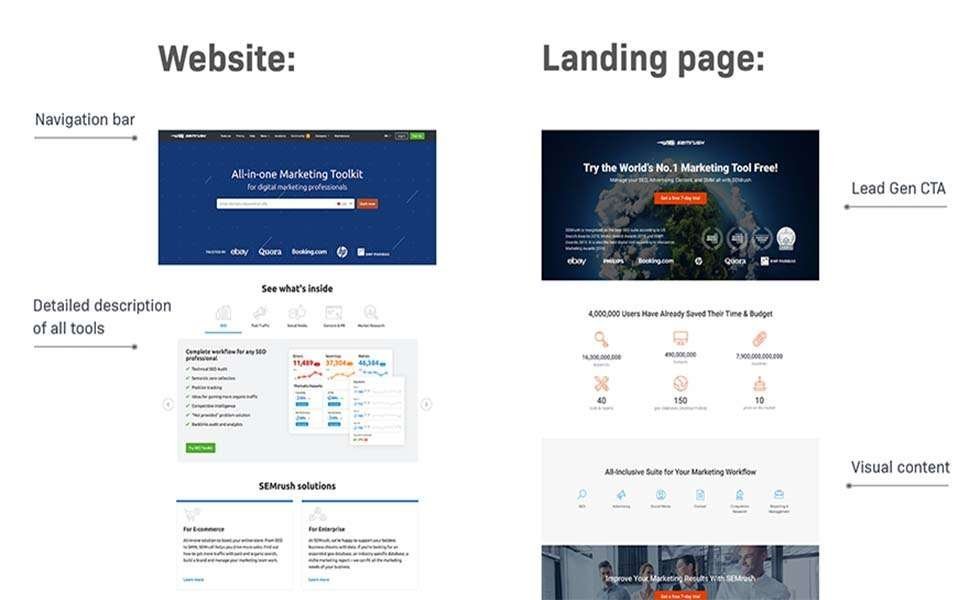
The landing page is one of the most important parts of the process. It is where the visitor decides whether to trust you, continue, or leave.
A strong landing page should have a clear message, a credible promise, a concrete benefit, readable structure, and a visible call to action.
It does not always need to be long. It needs to be complete enough to answer the visitor’s main questions.
A good landing page usually includes:
- a clear headline;
- a short explanation of the offer;
- benefits, not just features;
- trust elements such as testimonials, numbers, or case studies;
- a simple form;
- a strong call to action;
- answers to the main objections.
When the page is connected to a broader digital strategy, it performs much better. For this reason, it is useful to look at customer acquisition together with your overall web marketing strategies.
4. Drive Qualified Traffic
Without traffic, there are no contacts. But without qualified traffic, there is only waste.
The main channels for generating useful visits include:
- SEO, to attract people searching organically on Google;
- Google Ads, to reach users with clear search intent;
- LinkedIn Ads, especially for B2B campaigns;
- Meta Ads, useful for many B2C campaigns and retargeting strategies;
- email marketing, to activate existing contacts;
- organic content, such as blog posts, newsletters, videos, and social media content;
- partnerships and referrals, often underestimated but extremely valuable.
Each channel has a different role.
Google Ads often works well when demand is already conscious. SEO builds long-term visibility. LinkedIn can reach business decision-makers. Email marketing nurtures relationships. Retargeting brings back people who have already shown interest.
If paid search is part of your acquisition strategy, this article on how to maximize Google Ads performance can help you connect advertising campaigns with better commercial results.
5. Qualify Your Contacts
Not every contact should immediately go to sales.
Some people are ready. Others need more information. Others are not a good fit at all.
That is why qualification is essential. It can be simple, based on form answers, or more advanced, using CRM systems, automation, and lead scoring.
Lead scoring assigns a value to contacts based on their characteristics and behaviors. For example:
- industry fit;
- company size;
- decision-making role;
- request for a quote;
- visits to commercial pages;
- email opens and clicks;
- webinar attendance;
- download of advanced resources;
- repeated interactions over time.
This allows the sales team to focus on the most promising opportunities instead of wasting time on poorly matched contacts.
6. Activate Follow-Up and Nurturing
Most conversions do not happen after the first interaction.
That is why follow-up matters so much.
A strong nurturing system may include:
- educational emails;
- case studies;
- comparison content;
- webinar invitations;
- automated email sequences;
- sales reminders;
- personalized messages based on interests and behavior.
The goal is not to bombard the prospect. The goal is to remain useful.
AI, CRM and Smarter Prospect Management
Today, talking about customer acquisition without mentioning artificial intelligence would be incomplete.
But let’s be clear: AI does not turn a weak strategy into a strong one. It amplifies what already exists.
If your positioning is confused, AI will help you produce more confused content, faster. If your target is unclear, AI will generate more messages, but not necessarily better messages. If your CRM is messy, automation may simply multiply the chaos.
Used properly, however, AI can improve several areas of prospect management:
- target analysis, identifying segments, needs, and recurring patterns;
- content creation, supporting drafts for articles, emails, landing pages, and ads;
- personalization, adapting messages and follow-up based on behavior;
- predictive scoring, estimating which contacts are more likely to convert;
- AI chatbots and assistants, answering questions and qualifying requests;
- sales conversation analysis, identifying objections, needs, and buying signals;
- campaign optimization, reading data and suggesting operational priorities.
The real advantage is not “using AI”. The real advantage is using AI inside a clear, well-designed commercial process.
The Most Common Mistakes Companies Make
Many acquisition campaigns do not fail because the market is not interested. They fail because the system is poorly designed.
Mistake 1: Chasing More Contacts Instead of Better Contacts
An unqualified contact costs time, budget, and attention. It is better to generate 20 relevant inquiries than 200 contacts with no real fit.
Mistake 2: Using Generic Messaging
Phrases like “innovative solutions for your business” or “360-degree tailored services” say everything and nothing. The customer must quickly understand what you do, who you help, and what problem you solve.
Mistake 3: Sending Campaign Traffic to the Homepage
Your homepage introduces your company. A landing page converts a specific audience on a specific offer. They are not the same thing.
Mistake 4: Asking for Too Much Information Too Soon
A form with too many fields can discourage interested people. Ask only what you truly need at that stage. You can collect more information later.
Mistake 5: Responding Too Slowly
When a hot opportunity contacts you, speed matters. If you reply too late, a competitor may already be in the conversation.
Mistake 6: Not Using a CRM
Managing valuable contacts through scattered emails, spreadsheets, and memory is risky. A CRM helps you track conversations, status, next actions, and potential value.
Mistake 7: Measuring Only the Cost per Lead
Cost per lead is useful, but it is not enough. You need to know how many contacts become opportunities, how many opportunities become customers, and how much revenue they generate.
10 Key Elements of a Successful Acquisition Campaign
- Define your target precisely
Before investing in traffic, clarify who you want to reach. Industry, role, problem, urgency, budget, and awareness level can completely change the strategy. - Create a clear value proposition
Visitors must understand in seconds why they should leave their details. Avoid vague slogans and focus on concrete benefits. - Build useful content
Guides, articles, checklists, videos, webinars, and case studies help potential customers trust you before they speak with you. - Use dedicated landing pages
Every important campaign should have a page aligned with the ad, audience, offer, and conversion goal. - Simplify the form
Ask for the data you need, not everything you would like to know. A simpler form can increase conversions, while smart questions can improve quality. - Drive qualified traffic
SEO, Google Ads, social advertising, LinkedIn, newsletters, and retargeting should be chosen based on your audience’s behavior, not on trends. - Integrate CRM and automation
Every contact should enter a trackable process: source, interest, status, assigned salesperson, follow-up, and next action. - Segment your audience
Do not communicate with everyone in the same way. A CEO, a marketing manager, and an end user may have very different needs. - Nurture prospects over time
Someone who does not buy today may buy later. Newsletters, email sequences, and targeted content keep the relationship alive. - Measure sales, not just form submissions
The final metric is not how many forms were submitted, but how many contacts became real business opportunities and paying customers.
Which KPIs Should You Measure?
To understand whether a campaign is working, you need to look beyond the number of contacts collected.
The most useful metrics include:
- landing page conversion rate, meaning how many visitors become contacts;
- cost per lead, useful for evaluating initial campaign efficiency;
- contact quality, based on target fit, interest, and commercial potential;
- lead-to-opportunity rate, meaning how many contacts become real sales opportunities;
- opportunity-to-customer rate, meaning how many opportunities become customers;
- response time, especially important for urgent requests;
- average customer value;
- return on investment of the campaign.
A campaign with a low cost per lead may look efficient, but if those contacts never buy, it is only a cost disguised as a result.
On the other hand, a campaign with a higher cost per lead can be extremely profitable if it generates qualified contacts and valuable customers.
B2B Lead Generation
In B2B, lead generation usually requires more patience and a more structured approach.
Decision-making processes are longer, involve more people, and require more rational content.
A B2B buyer is not just looking for the lowest price. They are looking for reliability, expertise, risk reduction, industry knowledge, and the ability to solve a specific business problem.
That is why B2B acquisition often works well with:
- in-depth guides;
- white papers;
- case studies;
- technical webinars;
- personalized audits;
- demos;
- LinkedIn campaigns;
- SEO content focused on specific problems;
- consultative email sequences;
- account-based marketing strategies.
In B2B, the best signal is not always a generic form submission. Sometimes the best signal is repeated behavior: visiting service pages, reading case studies, opening emails, downloading content, and then requesting a conversation.
For a deeper look at the topic, you can also read this article on B2B Lead Generation statistics.
Offline Prospecting Still Matters
Digital channels are powerful, but not every valuable contact is generated online.
Events, trade shows, networking meetings, local partnerships, direct conversations, printed materials, phone calls, and offline referrals can still produce excellent opportunities, especially when they are connected to a digital follow-up system.
The real difference is not online versus offline. The real difference is whether the contact enters a structured process.
A business card collected at an event is not useful if it stays in a drawer. A conversation at a trade show becomes valuable when it is added to a CRM, segmented correctly, followed up with relevant content, and connected to a sales opportunity.
For this reason, you may also find useful this guide on offline lead generation.
Using Social Media to Attract Prospects
Social media can support customer acquisition, but only when it is used with a clear strategy.
Publishing random posts is not enough. The goal is to create visibility, authority, trust, and a path that leads people from attention to action.
Social media can help you:
- educate your audience;
- distribute useful content;
- promote webinars, guides, and events;
- build retargeting audiences;
- start conversations with potential customers;
- support paid campaigns;
- increase brand familiarity before the sales conversation.
For many businesses, social media works best when it does not try to close the sale immediately. It should create familiarity and move people toward deeper content, landing pages, newsletters, or direct conversations.
If social channels are part of your strategy, you can go deeper with this complete guide to social media marketing strategies.
Customer Acquisition for eCommerce and B2C
In B2C and eCommerce, the process works differently, but it remains just as important.
Here, a contact may come from a discount code, a quiz, a buying guide, a wishlist, an abandoned cart, a newsletter form, or a social media campaign.
The goal is not only to collect an email address. The goal is to understand interests, behavior, preferences, and purchase intent.
An eCommerce business, for example, can attract future customers through:
- newsletter signups;
- welcome discounts;
- product recommendation quizzes;
- buying guides;
- back-in-stock notifications;
- abandoned cart recovery;
- retargeting campaigns;
- loyalty programs.
Even here, quality matters. Thousands of subscribers are not valuable if they never open, click, buy, or engage.
A Qualified Contact Database Is an Investment, Not a Cost
One of the smartest investments a company can make is building a database of qualified, segmented, and properly nurtured contacts.
An advertising campaign can end. A social post can disappear from the feed. An ad can stop performing. But a well-managed contact database can generate opportunities for months or even years.
Of course, simply collecting contacts is not enough.
You need a real system: clear targeting, useful content, effective landing pages, qualified traffic, CRM, automation, follow-up, nurturing, and performance measurement.
The real question, then, is not whether your company should invest in lead generation.
The real question is:
How many customers are you losing because you do not yet have an effective system for turning interest into relationships, and relationships into sales?
Today’s qualified contacts can become tomorrow’s satisfied customers. And if you manage them properly, they will not buy only once. They can become loyal customers, repeat buyers, and promoters of your brand.
This is why lead generation is not just another digital marketing tactic. It is one of the most intelligent ways to increase sales, attract better customers, and build long-term business value.